 Play Games
 9 months ago
215
9 months ago
215
The modern gaming industry operates on player engagement and retention. While high-quality content is the primary draw, the most effective monetization systems rely on psychological principles that predate the digital age. They don’t just ask the player to spend money; they engineer a compelling, repeatable loop designed to maximize the desire for randomized rewards. This article explores how video game monetization leverages the Variable Ratio Reinforcement schedule, a core principle of casino design, to drive continuous player spending on unpredictable, high-value digital rewards.
Casinos use sophisticated algorithms that have changed over time. But this clever engineering isn’t new. It’s a digital evolution of the same behavioral science that has powered physical casinos for decades. Casino experts at Vegas Slots Online looked into the heart of it all is one of the most powerful concepts in psychology: the Variable Ratio Reinforcement schedule.
Game designers, whether building a casino floor or a free-to-play mobile RPG, have learned on a human level that motivation peaks when the reward is unpredictable. We aren’t driven by what we know we’ll get, but rather by the stimulating potential of what we might get. By harnessing this principle, games activate a proven psychological mechanism that is both simple and incredibly efficient. The shift is key: they’re not just selling a cosmetic item; they’re selling the chance at one.
Variable Ratio: The Compulsion Loop
So, what is a variable ratio schedule? Mapped out by psychologist B.F. Skinner, it simply means a reward comes after an unpredictable number of actions. Crucially, you never know if the very next try will be the big one, which means the possibility of a win is always just one pull away.
Think of the difference. In a fixed system, you get a prize every 10th time. Once you hit the 9th, you know the next is a guaranteed win. The excitement actually drops, and you’re likely to take a break afterward. But in a variable ratio system (the foundation of gacha and loot boxes), your engagement stays constant because you’re continuously driven by the hope that this attempt will pay off.
This constant, unpredictable anticipation is the engine of the compulsion loop. Designers create a powerful reward (a rare, highly desired item) and wrap it in a low-probability shell. When a player gets a common reward, it reinforces the spending behavior. And when they miss the rare item? The unpredictable nature keeps hope alive for the next spin.
This specific psychological engineering is so effective because it converts casual curiosity into sustained, high-frequency behavior. For gamers interested in understanding the full spectrum of monetization strategies employed by major publishers, it’s worth reading about and discussing the ethics and economics of microtransactions in the live-service space.
The Power of the Near-Miss Effect
But there’s another layer. The most effective systems also use the Near-Miss Effect to heighten engagement. Borrowed directly from slot machine design, this occurs when the result is painfully close to the grand prize but falls just short. Very similar to getting two of three rare symbols on a slot reel.
In modern games, the near-miss shows up in a few key ways:
- Visual and Audio Design: Flashing lights, slow-motion reveals and exciting sound effects play out even for common drops. This mimics the drama of a high-value win (even when the reward is slightly or substantially low).
- Reward Tiering: Getting the second-best item, or a “Legendary but not Mythic” tier. The feeling of missing the ultimate prize by one notch psychologically prepares you to immediately try again.
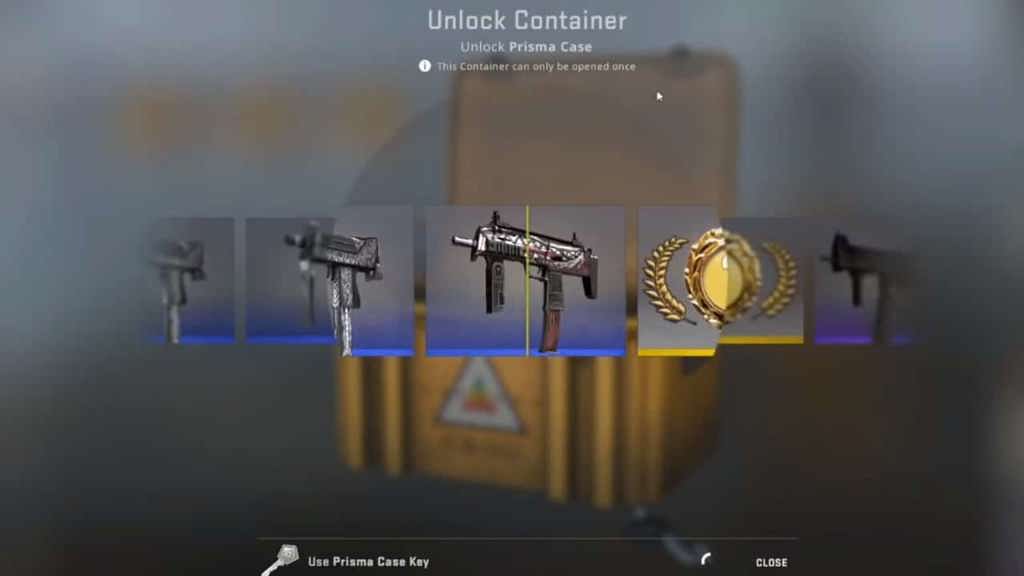
A perfect example is the CS:GO case opening system. You buy keys to open randomized containers for a chance at rare cosmetic “skins.” The opening animation is a masterclass in the near-miss. The reel spins, showing all the incredible rare items flash by before it lands on your usually common outcome. That visual tease of a high-value knife skin scrolling past isn’t an accident; it’s a critical design strategy to make you buy another key.
From Cosmetic Drop to Financial Value
The link between the slot machine psyche and gaming gets even stronger when randomized items gain real-world value. For systems like CS:GO skins, the chance element is supercharged by a financial layer, where the rarity from the random drop instantly translates to a dollar value on a marketplace.
Now, the Variable Ratio Reinforcement schedule isn’t just a game. No, it’s gambling with real-world assets. The sheer unpredictability of the drop rate dictates the market price, making the act of “rolling” for items not just a pastime, but a perceived investment.
So, the next time you feel that irresistible pull to open just one more loot box or spin the gacha one more time, remember what’s happening. It isn’t just luck. You’re caught in a brilliantly crafted psychological loop, one that turns random chance into pure psychological fuel. This machine knows how to keep us playing, and honestly, knowing how it works is the first step to playing on your own terms.
The post The Slot Machine Psyche – How Variable Ratio Reinforcement Drives Modern Gaming Engagement appeared first on PlayStation Universe.