 Play Games
 9 months ago
148
9 months ago
148
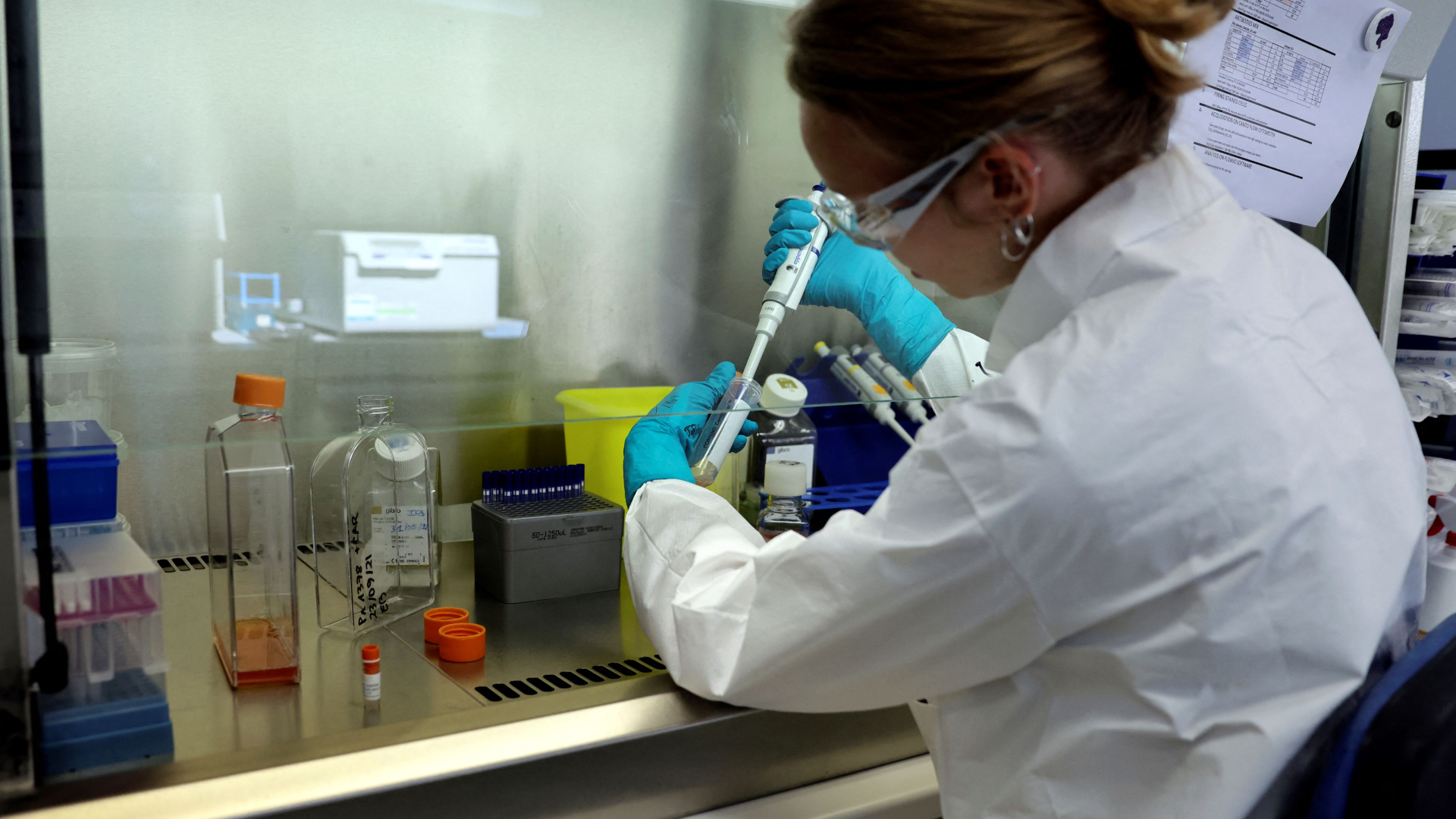
Google has announced a new AI model as part of a research collaboration with Yale University. If that sounds a little dry and unexciting, well, you've probably got AI fatigue like the rest of us. However, this one may well be worth paying attention to, as it's already revealed a promising new cancer treatment method—which Google describes as "a milestone for AI in science."
As Google's blog post details, a major challenge in cancer immunotherapy is the existence of "cold" tumors, or tumors that are essentially invisible to the body's immune system. The C2S-Scale 27B model was tasked with finding a drug that could act as a conditional amplifier, or something capable of boosting the immune signal in an environment where low levels of interferon, an immune-signalling protein, were already present—but crucially, not in significant enough quantities to trigger the immune system into doing its job.
Essentially, it was looking for a drug that could turn a "cold" tumour "hot", or susceptible to immunotherapy, when interferon was already in the mix.
The model simulated the effect of over 4,000 drugs through what the researchers refer to as a "dual-context virtual screen." This had two stages: the first being real-world patient tumor samples with low-level interferon signalling, and the second being existing cell data with no immune context.
With the screen in place, the AI model was tasked with identifying compounds that would fulfil this specific brief. The AI came back with many potential candidates, but a small fraction of them (10 to 30%, by Google's estimates) were already known in prior literature. The remaining drugs are described as "surprising hits" with no prior known link to the study's parameters.

Not only that, but the model also revealed a specific result. It predicted a strong increase in antigens (immune-signalling particles) when a kinase CK2 inhibitor, called silmitasertib, was applied in an "immune context positive" setting, ie in the real-world patient samples where low-level interferon was present, but not in the "immune-context-neutral" setting, ie the isolated cell data.
This caused much excitement among the researchers, as silmitasertib had not been previously reported to enhance antigen presentation to such a degree. In essence, the AI had generated a new, testable hypothesis, instead of merely repeating known facts.
To the lab, then. The researchers discovered that treating cells with silmitasertib alone had no effect on antigen presentation, but treating the cells with it in combination with low-dose interferon resulted in a roughly 50% increase, which would make a "cold" tumor much more visible to the immune system. The AI model had successfully identified a novel, interferon-conditional amplifier that could potentially make previously unresponsive tumors much more treatable with immunotherapy.

And hopefully, this is just the beginning. According to the researchers:
"This result also provides a blueprint for a new kind of biological discovery. It demonstrates that by following the scaling laws and building larger models like C2S-Scale 27B, we can create predictive models of cellular behavior that are powerful enough to run high-throughput virtual screens, discover context-conditioned biology, and generate biologically-grounded hypotheses."
So, while it's tempting to throw AI under the bus entirely for its many, many flaws, its potential to discover new scientific breakthroughs may be genuinely world-changing. It's important to remember that, while AI is being adopted at an unprecedented, and almost-certainly ill-advised rate, there is a real possibility it may be able to take on some of the hardest challenges facing our species. As long as it's controlled by the right hands, of course. Just saying.